
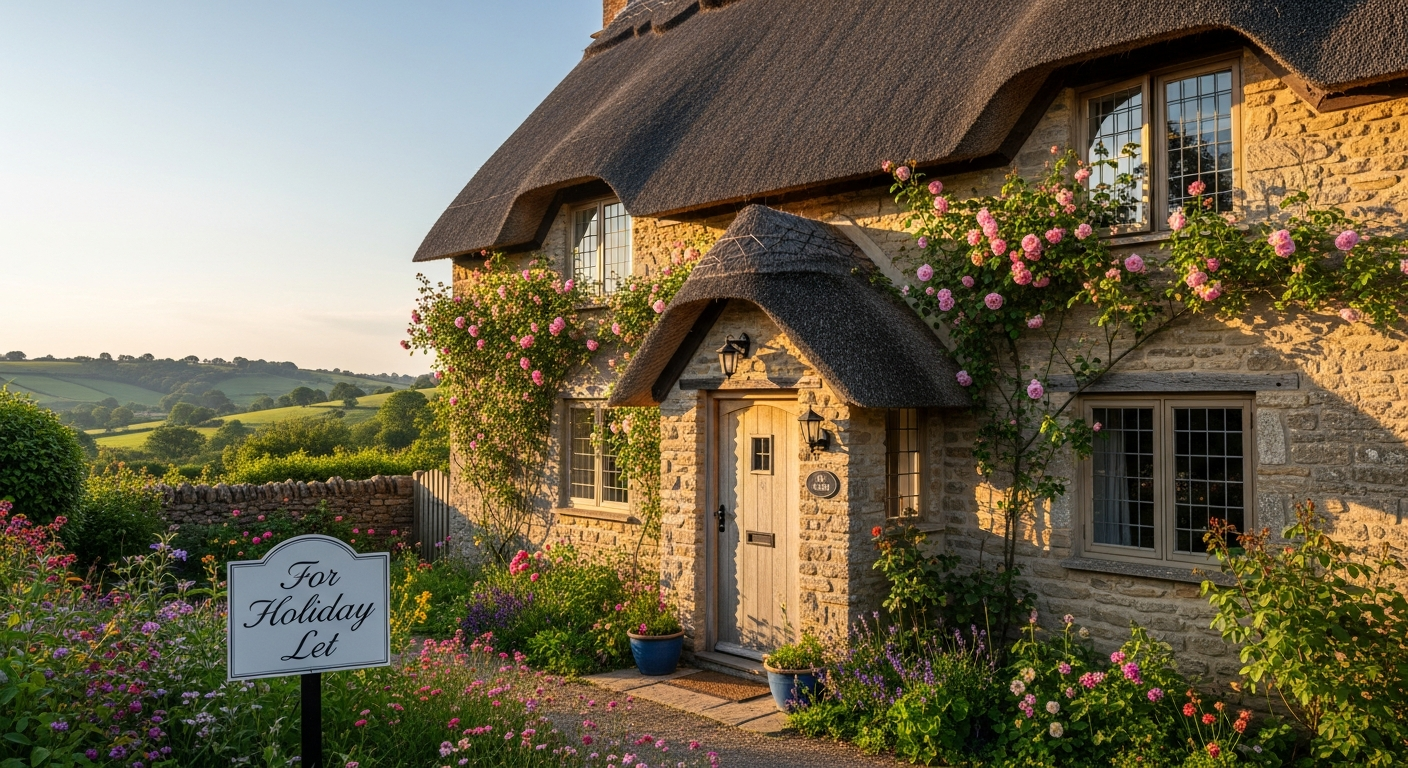
How to Start a Holiday Let in Dorset: A Complete Guide for New Owners
How to Start a Holiday Let in Dorset: A Complete Guide for New Owners
So you've got a property in Dorset — maybe a coastal cottage near Lyme Regis, a charming townhouse in Dorchester, or a New Forest retreat tucked away down a quiet lane — and you're wondering whether it could work as a holiday let.
Good news: Dorset is one of the strongest holiday let markets in the UK. The Jurassic Coast is a UNESCO World Heritage Site, the New Forest draws millions of visitors annually, and demand for quality self-catering accommodation continues to grow year on year.
But where do you actually start?
This guide walks you through everything, from the practicalities of regulations and insurance to the strategic decisions around furnishing, pricing, and marketing that will determine whether your property earns a decent return or sits empty most of the year.
Step 1: Check Whether You Need Planning Permission
First things first — can you legally operate a holiday let from your property?
The short answer: In most cases, yes. Converting a residential property to a holiday let typically falls within the same planning use class (C3 dwelling house) and doesn't require planning permission.
However, there are exceptions:
- If your property is in a conservation area, there may be additional restrictions
- Some leasehold properties have covenants preventing short-term letting
- If you're in a national park (parts of Dorset are), check with the local planning authority
- New Forest National Park has specific policies worth reviewing
What to do: Contact your local council's planning department. For Dorset properties, that's usually Dorset Council or, for New Forest properties, the New Forest National Park Authority.
It's a quick phone call that could save you significant problems later.
Step 2: Understand the Legal Requirements
Holiday letting comes with legal responsibilities. Here's what you need to have in place:
Gas Safety
If your property has gas appliances, you need an annual Gas Safety Certificate from a Gas Safe registered engineer. This is a legal requirement, not optional.
Electrical Safety
An Electrical Installation Condition Report (EICR) should be carried out every five years. All portable appliances should also be PAT tested regularly.
Fire Safety
This is a big one. Holiday lets need:
- Working smoke alarms on every floor
- Carbon monoxide detectors in rooms with solid fuel or gas appliances
- A fire blanket in the kitchen
- A fire extinguisher (recommended)
- Clear fire escape routes
- A fire risk assessment
We take fire safety extremely seriously and ensure every property we manage exceeds minimum requirements.
Energy Performance Certificate (EPC)
You'll need a valid EPC. The current minimum rating for holiday lets is E, though this may tighten in future legislation.
Insurance
Standard home insurance won't cover holiday letting. You need specialist holiday let insurance that covers:
- Public liability (essential — guests could injure themselves)
- Buildings and contents
- Loss of income
- Accidental damage by guests
Companies like Boshers, Pikl, and Superscript offer specialist holiday let policies. Budget around £500-£1,200 per year depending on the property.
Step 3: Get Your Tax Position Right
The tax landscape for holiday lets changed significantly in 2025. Understanding where you stand is crucial.
The Key Changes
The old Furnished Holiday Lettings (FHL) tax regime was abolished in April 2025. This means holiday lets are now taxed the same as standard buy-to-let properties. Key impacts include:
- Mortgage interest relief is now restricted to a basic rate tax credit (20%)
- Capital Gains Tax relief (such as Business Asset Disposal Relief) no longer applies to holiday lets
- Capital allowances for furniture and fittings are no longer available under the old rules
For a detailed breakdown of what this means for your property, read our guide: Holiday Let Tax Changes: What Dorset Owners Need to Know.
What You Can Still Claim
Despite the changes, holiday lets remain financially attractive. You can still offset:
- Mortgage interest (at basic rate)
- Insurance premiums
- Utility bills
- Cleaning costs
- Management fees
- Maintenance and repairs
- Marketing costs
- Council tax
Important: Get a specialist property accountant. The tax rules are complex and change regularly. A good accountant will more than pay for themselves.
Step 4: Furnish and Style Your Property
This is where many new owners either over-invest or under-invest. Getting the balance right is key.
The Essentials Every Holiday Let Needs
- Comfortable beds — This is the single most important investment. Quality mattresses and bedding directly affect reviews.
- Well-equipped kitchen — Guests expect a dishwasher, oven, hob, microwave, and decent cookware. Coffee machine is a bonus that guests consistently mention in reviews.
- Fast, reliable WiFi — Absolute must. Aim for at least 30Mbps. Many guests work remotely during their stay.
- Smart TV with streaming — A Freeview/Freesat TV with a streaming device (Chromecast, Fire Stick) covers most needs.
- Washing machine and tumble dryer — Especially important for families and longer stays.
- Quality towels and linens — White hotel-quality towels and crisp bedding make a strong first impression.
What Sets Top-Performing Properties Apart
The difference between a property that averages 3 stars and one that consistently hits 4.8+ often comes down to thoughtful touches:
- Local guidebook with your genuine recommendations (not just a printout from TripAdvisor)
- Welcome hamper with local products — Dorset has brilliant artisan producers
- Board games and books for rainy afternoons (and there will be rainy afternoons — it's Dorset)
- Outdoor space that's properly furnished — a good garden table and comfortable chairs transform a garden
- Dog-friendly amenities if you accept pets — bowls, towels, a dog bed, and local walk recommendations
What Not to Spend Money On
- Expensive artwork (it gets damaged)
- Ultra-high-end electronics (they get broken)
- Anything white that isn't towels or bedding
- Complicated smart home systems (guests won't figure them out)
Step 5: Set Your Pricing Strategy
Pricing is where many owners leave money on the table. "Pick a number and stick with it" is the worst strategy you can adopt.
Dynamic Pricing Basics
Dorset has distinct seasonal patterns:
- Peak season (July-August, school holidays): Premium rates. Properties near the coast or with outdoor space command the highest prices.
- Shoulder season (May-June, September-October): Strong demand, slightly lower rates. Some of the best weather actually falls in September.
- Mid season (March-April, November): Moderate demand. Half-term weeks can command near-peak rates.
- Low season (December-February): Lower occupancy, but Christmas/New Year weeks are premium. Consider reduced minimum stays.
Event-Based Pricing
Dorset hosts several major events that drive accommodation demand:
- The Great Dorset Steam Fair (late August)
- Bournemouth Air Festival (August/September)
- Bestival and other music festivals
- Wimborne Folk Festival
- Various sailing events around Poole Harbour
Properties within easy reach of these events can charge significantly more during event weeks.
What Should You Actually Charge?
This varies enormously by property type, location, and quality. As a rough guide for a well-presented 2-3 bedroom property:
- Dorset coast (peak): £1,200-£2,500 per week
- New Forest (peak): £1,000-£2,200 per week
- Dorset towns (peak): £800-£1,500 per week
- Low season across all areas: 40-60% of peak rates
Want a more specific estimate? Use our free earnings calculator to get projections based on your property's actual features and location.
Step 6: Choose How to Market Your Property
You have three main options:
Option 1: List on Platforms (Airbnb, Booking.com, VRBO)
Pros: Instant access to millions of potential guests, built-in payment processing, review systems.
Cons: Commission fees of 15-20% per booking, your property competes directly with thousands of others, you're subject to platform rule changes, and you don't own the guest relationship.
Option 2: Your Own Direct Booking Website
Pros: No platform commission (just payment processing fees of around 2-3%), full control over your brand, direct guest relationships, better Google visibility.
Cons: Requires investment to build and maintain, takes time to build traffic and bookings.
We build bespoke direct booking websites for our managed properties on our own proprietary platform. The savings on platform fees typically pay for the website within the first few months.
Option 3: Multi-Platform + Direct (The Smart Approach)
The most successful holiday lets use a combination: platforms for visibility and initial bookings, plus a direct booking website to capture repeat guests and reduce platform dependency over time.
This is exactly the approach we recommend and implement for properties we manage.
Step 7: Decide on Management
This is perhaps the biggest decision you'll make. There are three broad approaches:
Self-Managing
You handle everything: guest communications, key handovers, cleaning coordination, maintenance issues, pricing adjustments, and dealing with problems at 11pm on a Saturday.
Works best if: You live locally, have significant free time, and enjoy hospitality.
Using a Management Company
A professional management company handles some or all of the above. The level of service varies enormously between providers.
What to look for:
- Local knowledge (a company based elsewhere won't understand Dorset's micro-markets)
- Transparent fee structure
- Technology that keeps you informed
- Genuine care about your property (not just treating it as a number)
- Flexibility in service levels
At Full Bed Hosts, we offer different levels of support — from setup and launch for hands-on owners, through to full management where we handle absolutely everything. We're based locally, we know the area inside out, and we genuinely care about making each property successful.
The Hybrid Approach
Some owners handle certain aspects themselves (perhaps they enjoy the guest communication) while delegating others (cleaning coordination, pricing optimisation). A good management company should be flexible enough to accommodate this.
Step 8: Prepare for Your First Guests
Before your first booking, make sure you've:
- Completed all safety checks and obtained certificates
- Set up specialist holiday let insurance
- Created a comprehensive welcome guide
- Established a reliable cleaning team
- Set up a key handover system (key safe or smart lock)
- Taken professional photographs
- Written compelling listing descriptions
- Set up your pricing calendar
- Registered with your local council if required
- Arranged for ongoing garden/exterior maintenance
The Welcome Guide
Your welcome guide should include:
- WiFi password (in large, clear text — this is the first thing guests look for)
- Heating/hot water instructions
- Appliance operating guides
- Local restaurant and pub recommendations (your personal favourites, not just the obvious ones)
- Walking routes from the property
- Nearest supermarket, pharmacy, and medical centre
- Emergency contact numbers
- Check-out procedures
Common Mistakes New Owners Make
Learning from others' mistakes is always cheaper than making your own:
1. Underpricing New owners often set prices too low to "get bookings." This attracts price-sensitive guests who tend to leave poorer reviews and treat properties with less care. Price for value, not volume.
2. Poor Photography This is the single biggest factor in booking conversion. Professional photography is not a luxury — it's essential. The difference between phone snaps and professional shots can mean 30-50% more bookings.
3. Ignoring Seasonality A flat rate all year round means you're overcharging in winter (empty calendar) and undercharging in summer (leaving money on the table).
4. Not Responding Quickly Guest inquiries have a very short shelf life. If you don't respond promptly, they'll book elsewhere. This is one of the biggest advantages of using a management company — we handle communications throughout the day, every day.
5. Skimping on Cleaning Poor cleaning is the fastest route to bad reviews. Invest in a thorough, reliable cleaning team. Every. Single. Time.
6. Not Having a Backup Plan Boilers break, pipes burst, guests lock themselves out. Have a network of reliable local tradespeople who can respond at short notice.
Is a Dorset Holiday Let Still a Good Investment?
Despite the tax changes, the fundamentals remain strong:
- Tourism demand in Dorset continues to grow, driven by the staycation trend and the UK's stunning coastline
- Property values in holiday let areas have remained resilient
- Rental yields for well-managed holiday lets significantly outperform standard long-term rentals
- The lifestyle benefit of having a well-maintained property in one of England's most beautiful counties
The owners who succeed are those who treat their holiday let as a proper business, invest in quality, and either develop the skills to manage it well or partner with someone who can.
Ready to Get Started?
If you're considering turning your Dorset, New Forest, or Salisbury property into a holiday let, we're always happy to have an honest conversation about whether it makes sense for your situation.
Estimate your property's earning potential with our free calculator, or get in touch to chat about how we can help.
No hard sell. Just practical advice from people who do this every day and genuinely love what they do.
Related Reading
- Holiday Let Tax Changes: What Dorset Owners Need to Know - Detailed breakdown of the 2025 FHL rule changes and what they mean for your investment.
- Why Your Holiday Let Deserves Its Own Website - How a direct booking website can save you thousands in platform fees.
- Our Management Services - From setup to full management, find the right level of support.
- Direct Booking Websites - Learn about our proprietary website platform for holiday lets.
Full Bed Hosts specialises in holiday let management across Dorset, the New Forest, and Salisbury. We're a local family business with the expertise and technology to help your property succeed. Get in touch to find out how we can help.
Calculate Your Property's Potential
Interested in holiday let management after reading this guide? Use our free calculator to see the potential returns for your property in this area.
Holiday Let ROI Calculator
Calculate your potential earnings with real 2024 market data from Dorset and the New Forest
Fill in the property details to see your potential returns
* Calculations based on real market data from Airbtics and industry reports for 2024. Individual results may vary based on property condition, location, and market factors.
Ready to Maximise Your Property's Potential?
Get expert holiday let management for your Dorset or New Forest property. Our proven approach delivers results for property owners across the region.