How to Reduce Your Reliance on Airbnb: A Practical Guide for Holiday Let Owners

James Druce
Founder, Full Bed Hosts · MSc Tourism Management
Airbnb is a brilliant platform for getting started — and it remains a valuable bookings channel. But the owners who build the most profitable holiday let businesses are the ones who gradually reduce their platform dependency. Here's how that shift happens in practice, and why it's worth planning for from the beginning.

Why Airbnb Is Still Worth Using
There's a reason most holiday let owners start with Airbnb — it works. The platform offers instant access to millions of active travellers, a well-established trust system through reviews and verified profiles, and AirCover host protection for eligible bookings.
The setup is straightforward, the payment processing is handled for you, and the algorithm rewards responsive, well-reviewed hosts with more visibility. For owners who are new to short-term letting, it's an accessible and low-risk starting point.
- Massive built-in audience — no need to drive your own traffic
- AirCover damage protection for eligible bookings
- Established guest trust and review system
- Easy setup with built-in payment processing
- Algorithm rewards quality — better reviews mean more bookings
The Downsides of Relying on Airbnb
Airbnb's convenience comes at a cost. Platform fees typically amount to 3% for hosts and 14–16% for guests — meaning for every £1,000 booking, around £170–£190 leaves the room in fees alone, before your own costs.
Beyond fees, Airbnb owners are subject to algorithm changes, platform policy updates, and the ever-present risk of account issues. You don't own the guest relationship — you can't email past guests, build loyalty, or encourage repeat bookings outside the platform.
- Platform fees of 3% (host) + 14–16% (guest) on every booking
- Algorithm dependency — changes can affect your visibility overnight
- No direct guest relationship or repeat booking capability
- Policy changes can affect how and when you get paid
- Limited brand differentiation — you're one of millions of listings
The Case for Direct Bookings
Direct bookings — where guests book with you through your own website, without an intermediary platform — eliminate the fee layer entirely. A £1,000 booking stays a £1,000 booking (minus payment processing, which typically runs to 1.5–2%).
More importantly, you own the guest relationship. You can collect email addresses, encourage repeat bookings with loyalty offers, and build a database of guests who already love your property. Over time, a portfolio of repeat direct guests becomes one of the most valuable assets a holiday let owner can have.
- No platform fees — keep significantly more of every booking
- Own your guest data and build direct relationships
- Encourage repeat bookings with loyalty discounts
- Full control over your pricing, policies, and branding
- Not subject to platform algorithm changes
The Downsides of Direct Bookings
Direct bookings don't arrive by themselves. Without a platform's built-in audience, you need to drive traffic — through SEO, social media, email marketing, or paid advertising. You also need to handle your own payment processing, booking management, and guest ID verification.
For owners managing independently, this can be a significant additional burden. But for owners working with a management company that handles these functions as part of their service, the added complexity is minimal.
Wondering What Your Property Could Earn?
Get a free, no-obligation income estimate from our local team. We'll give you an honest figure based on your property, location, and the current market — no pressure, no commitment.
The Smart Approach: Use Airbnb as the Engine, Not the Destination
The most successful holiday let owners don't abandon Airbnb — they stop depending on it exclusively. Airbnb provides strong new-guest acquisition, particularly in the early stages. But over time, the goal is to use it as the top of a funnel: attracting guests for the first time, then recapturing them as direct repeat bookers who bypass the platform entirely.
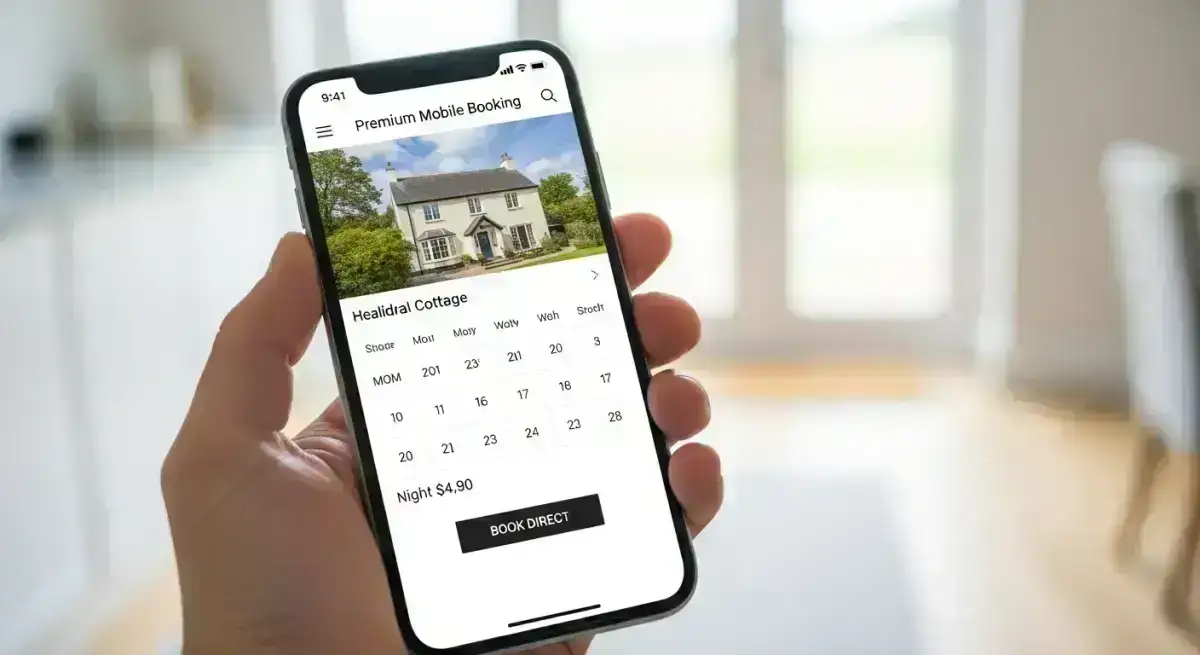
At Full Bed Hosts, we manage your Airbnb listing as the primary bookings channel while building your own direct booking capability through a bespoke, SEO-optimised website. The two work together: Airbnb brings guests in, your own website keeps them coming back — at a significantly lower cost per booking.
17% of the booking value after Airbnb's fee is deducted. No setup fees, fair exit terms, no hidden charges. Every owner gets professional photography, listing creation, guest communication, and monthly reporting as standard — with no onboarding cost.
If you want to understand the full landscape before deciding — comparing Airbnb, Booking.com, and direct bookings side-by-side — our guide on which platforms to list your holiday let on covers that in detail.
How a Direct Booking Website Pays for Itself
The economics are straightforward. Our direct booking websites start from £900 for the build, with a monthly hosting and maintenance fee of around £25. If your average booking is £800 — and just one of those per month comes through your own site rather than Airbnb — the saving on fees alone (roughly £136 at 17%) covers the monthly hosting cost more than five times over.
Most of our owners with direct booking sites recoup the build cost within their first full season. After that, it's essentially free money.
Conclusion
Airbnb is an excellent platform and an important part of any holiday let strategy. But relying on it exclusively means paying fees on every booking, with no guest data and no long-term relationship. The owners who build the most valuable holiday let businesses combine Airbnb with a direct booking presence.
If you're not sure where to start, or want to understand how a direct booking website could work alongside your existing Airbnb listing, get in touch — we're happy to walk you through it.