How a Direct Booking Website Can Save Your Holiday Let Thousands in Platform Fees

James Druce
Founder, Full Bed Hosts · MSc Tourism Management
Every booking made through Airbnb, Booking.com or another online travel agency carries a cost. The exact structure varies, but a common Airbnb model charges the host around 3 per cent while adding roughly 12 to 15 per cent to the guest's total.
Across a full year, an active holiday let can send thousands of pounds to platforms. Those channels provide valuable reach, trust and booking technology, but they do not need to own every guest relationship. A well-built direct website creates a lower-cost route for repeat visitors and guests who discover the property elsewhere.
How the maths works
Consider a property generating £30,000 a year in accommodation bookings. If the combined host and guest platform cost averages 15 per cent, £4,500 of booking value is leaving through fees. The owner may not see every pound as a line-item deduction because part of it is charged to the guest, but it still raises the price of choosing the property.
If only 30 per cent of the £30,000 moves to direct bookings, that is £9,000 transacted without the same platform commission. At 15 per cent, the combined saving is approximately £1,350 a year. That can more than cover the cost of a well-built direct booking website.
The owner can decide how to share the saving. Keeping the full amount improves margin, while offering a modest direct-booking advantage gives guests a clear reason to use the website. Both parties can be better off than under the platform price.
Direct bookings still carry legitimate costs: card processing, website maintenance, booking software, marketing and management. They are not free. The advantage is that those costs are usually lower, more controllable and invested in an asset the property owns.
What a direct booking website does
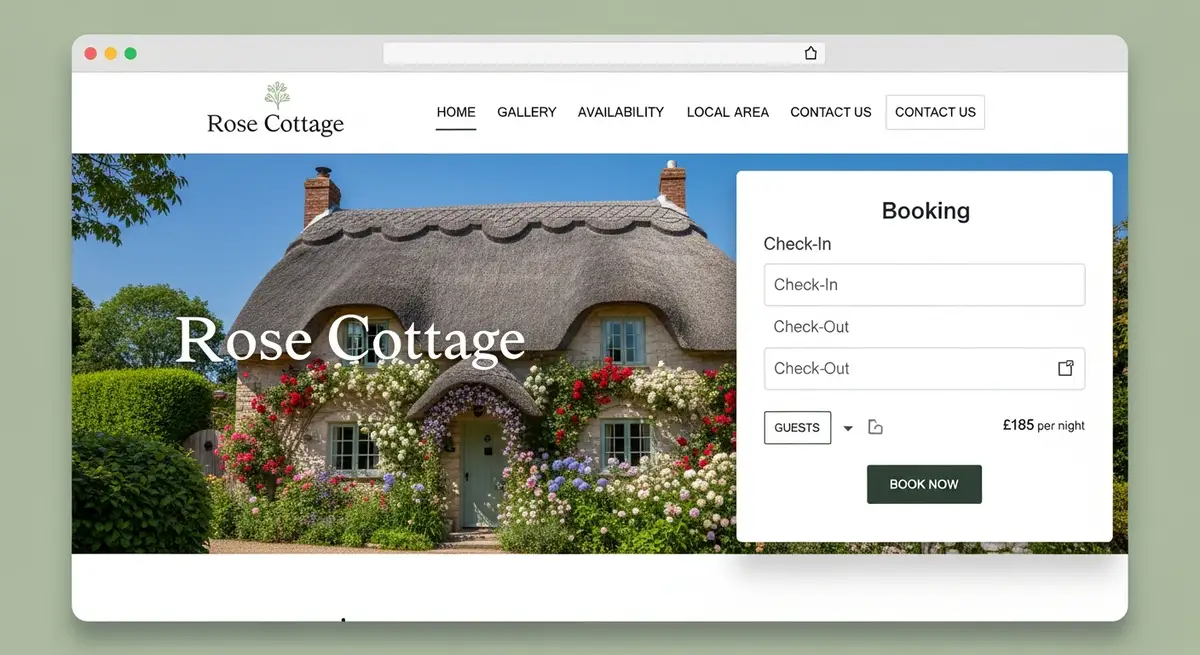
A proper direct booking website lets guests check dates, receive an accurate price, accept terms, pay securely and receive confirmation without platform involvement. It is more than a gallery with a contact form.
Real-time availability should synchronise with Airbnb, Booking.com and other channels through the property management system. This prevents double bookings and means an owner does not need to update several calendars manually.
The site integrates with a secure payment system for deposits and balances. Automated emails can provide confirmation, payment reminders and pre-arrival information while keeping the experience consistent with the property's brand.
Direct booking also captures guest data that an online travel agency may restrict. With appropriate consent and privacy processes, owners can understand where guests came from, build a mailing list and maintain a relationship after departure.
The website can explain the property more fully than a standard platform template. Location guides, floor plans, accessibility information, local stories and richer photography help guests decide with confidence and attract relevant search traffic.
The repeat guest opportunity
Platforms largely own the first guest relationship. Messaging stays inside their system, contact details may be restricted and marketing to past guests is limited. That makes sense within the platform model, but it leaves owners paying an acquisition cost again when the same guest returns.
A direct-booking guest has chosen the property's own channel. Subject to consent and data-protection rules, the business can send relevant updates, a returning-guest offer or news about newly released dates.
Repeat guests are usually easier to manage. They know the location, layout and house rules, and the team knows their booking history. They often ask fewer pre-arrival questions and are more likely to care for a place they already value.
Their acquisition cost is also low. A warm post-stay email, a memorable experience and an easy-to-find website may be enough to secure the next booking. Over several years, this compounding repeat business is more valuable than one isolated commission saving.
Booking platforms still have an important role
A direct website should not replace platforms entirely. Airbnb's reach for new guest acquisition is difficult for an individual property to match, while Booking.com and Vrbo reach additional audiences. Reviews and platform trust can help an unknown property secure its first bookings.
The smart strategy uses those platforms to introduce guests to the property, then gives people a clear direct route when they return or recommend it. Owners must respect platform terms and must not divert an active platform enquiry outside its rules.
A well-designed website makes the choice easy later. It should appear when someone searches the property name, load quickly on a phone and state the value proposition clearly: no platform fees, the best available direct rate and personal local service.
Consistency matters. Availability, prices, policies and property details should match across channels. Guests lose trust if the direct site looks outdated or shows contradictory terms.
Our related guide explains why every holiday let needs a direct booking website as part of a resilient channel strategy.
What Full Bed Hosts builds
Full Bed Hosts builds SEO-optimised direct booking websites for the properties we manage. Each site is tailored to the property's location, character and ideal guest rather than copied into a generic template.
We connect live availability, secure booking and useful local content, then support the site with professional photography and accurate listing information. Search optimisation helps the property appear for its own name and relevant local searches over time.
This is part of our holiday let management service, not an expensive add-on. Platforms continue to generate new demand, while the direct site gives returning and organic guests a better route to book. That balanced approach keeps more long-term value with the property.