

If your holiday let calendar has felt emptier than usual this winter, you're not imagining it. Winter 2025–2026 has been one of the most challenging off-seasons the UK short-term rental market has seen in several years — and Dorset, the New Forest, and Salisbury have not been immune.
The good news is that quiet seasons don't last forever. The better news is that what you do right now — while most owners are simply waiting it out — will determine how well you perform when the summer bookings start flooding back in. And they will.
Why Has This Winter Been So Quiet?
Several factors have converged to make winter 2025–2026 particularly subdued:
- Economic uncertainty: UK consumer confidence remained fragile through late 2025, with households cautious about discretionary spending on leisure travel.
- Geopolitical anxiety: Escalating tensions in the Middle East — including the ongoing Iran conflict — have created a broader climate of financial nervousness that suppresses non-essential spending.
- Later booking windows: 30% of UK holiday bookings are now made within four weeks of the travel date — up 3% year-on-year. Properties relying on early bookings to fill winter gaps have felt this acutely.
- Post-FHL tax changes: The abolition of the Furnished Holiday Lettings tax regime in April 2025 has prompted some owners to reconsider their strategy, creating uncertainty in the market.
- Staycation softening: The COVID-era staycation boom has normalised, and guests are once again considering overseas options. This puts more pressure on UK properties to work harder to attract bookings.
IBISWorld data shows that UK holiday accommodation industry revenue is forecast to dip 0.3% in 2025–2026, in a market worth £4.1 billion. That's a modest decline, but it reflects a real shift in guest behaviour — and it disproportionately affects owners who haven't adapted their pricing, positioning, or marketing approach.
By the numbers: Winter 2025–2026
Sources: IBISWorld, Sykes Holiday Cottages Outlook Report 2025, Mintel
Why the Quiet Season Is Actually a Gift
Here's the counter-intuitive truth: the owners who will perform best in summer 2026 aren't the ones sitting anxiously checking their empty calendars right now. They're the ones treating this quiet period as the business opportunity it genuinely is.
When your property is turning over guests every few days, there's barely time to breathe — let alone think strategically. The quiet season removes that pressure. It gives you the space to do the work that actually shapes your income for the year ahead: defining your market, sharpening your offer, and getting the operational foundations right.
Properties that emerge from winter 2025–2026 well-positioned — with a clear target guest in mind, strong listing content, optimised pricing, and a professional management set-up — will be ideally placed to capture the pent-up demand that's building right now.

Your Winter Action Plan: 5 Things to Do Before Summer Arrives
1Define Your Ideal Guest
One of the most impactful decisions you'll make for your holiday let is choosing who you're targeting — and designing every element of your property and listing around them. "Everyone" is not a target market.
Are you targeting couples seeking a peaceful retreat? Families with young children? Multi-generational groups celebrating milestones? Dog owners exploring the New Forest? Each segment has different priorities, different peak booking times, and different willingness to pay.
Dorset, the New Forest, and Salisbury each attract distinct guest profiles. The coastal properties around Swanage and Weymouth draw beach-focused families in summer and couples on short breaks year-round. New Forest properties attract cyclists, horse riders, and nature lovers with genuine year-round demand. Salisbury and Wiltshire pull in culture and heritage visitors linked to Stonehenge and the cathedral city.
Knowing your guest means your pricing, your welcome pack, your listing copy, and your photos all speak directly to the people most likely to book — and most likely to leave a five-star review.
2Audit Your Listing and Pricing Strategy
When did you last read your Airbnb listing as a guest would? Most owners set their listings up once and rarely revisit them. But Airbnb's algorithm rewards freshness, completeness, and conversion rates — and an outdated listing is quietly costing you visibility and bookings.
- Check your photos: are they genuinely showcasing your property at its best? Professional photography typically increases enquiries by 30–40%.
- Review your title and description: do they speak to your ideal guest, or do they just describe rooms and square footage?
- Audit your amenities checklist: guests filter by amenities. A missing tick against 'hot tub', 'EV charger', or 'pet-friendly' means you're invisible in those searches.
- Review your minimum stay rules: in off-peak periods, lowering your minimum stay from 7 nights to 2–3 nights can unlock a significant volume of short break bookings.
- Revisit your cancellation policy: a moderate policy often converts better than strict in a late-booking market.
On pricing: properties using dynamic pricing tools see an average of 21–26% higher annual revenue and 6–7 additional bookings per year compared to those on fixed rates. If you're still setting seasonal rates manually, you're almost certainly leaving money on the table — particularly on high-demand weekends and event dates.
3Invest in Your Property — While It's Empty
The quiet season is the only time you can take your property offline for a few days without losing bookings. Use it.
Even modest improvements can have a disproportionate impact on review scores and repeat bookings. The amenities that deliver the strongest return on investment include:
- Hot tubs: properties with a hot tub earn 37–40% more revenue on average and book significantly more weeks per year.
- Pet-friendly features (secure garden, dog gate, water bowl): pet-friendly properties earn up to 31% more and see 2.5 additional bookings per year.
- EV charging: search demand is high, but only 5% of UK holiday lets currently have an EV charger. It's an easy differentiator.
- Quality linens and mattresses: a surprisingly high proportion of negative reviews cite poor sleep quality. It's cheap to fix relative to the review impact.
- Superfast broadband: essential for workation guests and increasingly expected by all demographics.
And don't overlook the small touches: a properly stocked welcome hamper with local Dorset products, a curated area guide, good coffee, and quality toiletries. These don't cost much — but they generate the kind of reviews that drive future bookings more reliably than any marketing spend.
4Get Your Summer Calendar in Order Now
The shift towards later booking windows doesn't mean you should wait to promote your summer availability. The guests who plan ahead — often the most valuable, high-spend guests — are already searching.
Make sure your summer 2026 calendar is open, your pricing reflects peak demand (school holidays in Dorset command a significant premium), and your listing is fully optimised before the spring booking surge begins in earnest — typically from late February through April.
Consider offering an early booking incentive for guests who commit before the end of March. Not a deep discount — a modest added-value offer (complimentary late check-out, local experiences voucher) is more effective than competing on price and sets a healthier precedent for your rates.
5Seriously Consider Professional Management
This might be the most important item on the list — not because self-managing is impossible, but because the gap between what self-managing owners earn and what professionally managed properties earn is widening.
In a market where dynamic pricing, response time, review management, multi-platform distribution, and Airbnb algorithm optimisation all directly influence income, the tools and expertise required are increasingly specialist. A good property manager brings all of that as standard — along with trusted local cleaners, maintenance contacts, and guest communication handled around the clock.
The quiet season is the ideal time to make this transition. There's no disruption to current guests, time to photograph your property properly, and sufficient runway to get your listing rebuilt and optimised before summer demand peaks. Owners who switch management ahead of the summer season typically see the benefit immediately — in both occupancy and nightly rates.
Read our guide on the true cost of self-managing a holiday let if you're weighing up the decision.
See What Your Property Could Earn This Summer
Use our free property earning potential tool to get a realistic income estimate for your holiday let — based on current market data for Dorset, the New Forest, and Salisbury.
Why Summer 2026 Could Be Exceptional
Every quiet season in the holiday let market is followed by a recovery. But the evidence suggests summer 2026 could be particularly strong — and there are good structural reasons for that optimism.
- Pent-up demand: the financial caution suppressing winter bookings doesn't disappear — it accumulates. Guests who have held back on leisure travel in early 2026 are significantly more likely to make a meaningful summer booking.
- UK summer weather advantage: with uncertainty about long-haul travel remaining elevated due to global events, UK coastal and countryside holidays benefit from being reliable, accessible, and genuinely world-class.
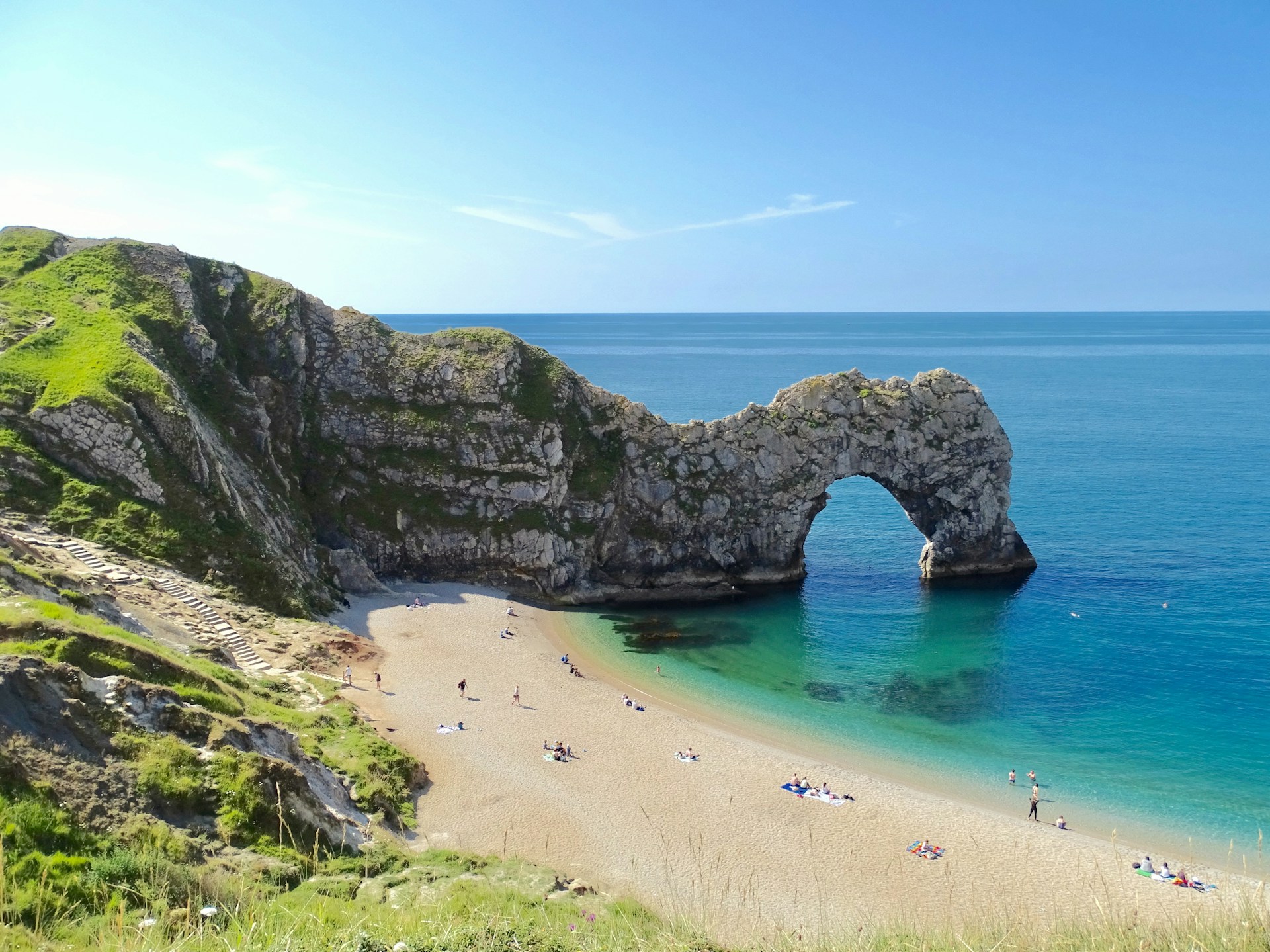
- Dorset and New Forest specific demand: both regions remain among the most sought-after holiday destinations in England. Dorset's Jurassic Coast, Sandbanks, and Purbeck consistently attract strong search demand regardless of wider market conditions.
- Short break culture: 32% of bookings are now short breaks of 3–5 nights. This extends your earning season well beyond school holidays, creating more opportunity across spring, early summer, and September.
- Repeat booker loyalty: 65% of guests are now repeat bookers. The owners building direct relationships and providing exceptional stays are creating a loyal customer base that will return year after year — independently of platform algorithms.
How Full Bed Hosts Can Get You Summer-Ready
At Full Bed Hosts, we manage holiday lets across Dorset, the New Forest, and Salisbury — and we've designed our service specifically for owners who want more than a listing management service. We treat each property as a business, and we manage it accordingly.
Our approach includes:
- Dynamic pricing across all major platforms — Airbnb, Booking.com, and your own direct booking website — updated daily to capture demand peaks
- Professional photography and listing optimisation on setup, to ensure your property is presented at its very best from day one
- Risk-based guest screening to protect your property and neighbourhood
- GPS-enabled cleaning management with quality-checked turnovers between every stay
- Automated guest communications from enquiry through to post-stay review requests
- Commission at a straightforward 17% — no hidden fees, no booking charges, no tricks
- A dedicated local team who know Dorset and the New Forest intimately
We're selective about the properties we take on — because our reputation depends on the quality of what we manage. If you're considering switching from self-management or from another agency, now is the right time to have that conversation.
To understand how we compare with other management options, see our comparison page. Or if you'd like to understand the financial case in more detail, our owners page lays out exactly what we do and what you can expect.
It's also worth understanding how the 2025 tax changes affect your holiday let strategy — particularly if you're reassessing whether the investment still makes sense under the new regime (it usually does, but context matters).
The Owners Who Win Are the Ones Who Prepare
The quietest winters tend to precede the busiest summers. Demand doesn't disappear — it builds. And the holiday let market in Dorset and the New Forest has structural advantages that make it resilient over any medium-term view.
The question isn't whether summer 2026 will be busy. It's whether your property will be positioned to capture that demand at the rates it deserves — or whether you'll be scrambling to fill gaps while better-presented, better-managed properties take the bookings that could have been yours.
Use the next few weeks well. Define your guest. Sharpen your offer. Get the right team behind you. The season is coming.